From documents to daily work
What do manufacturing QMS templates help you organize?
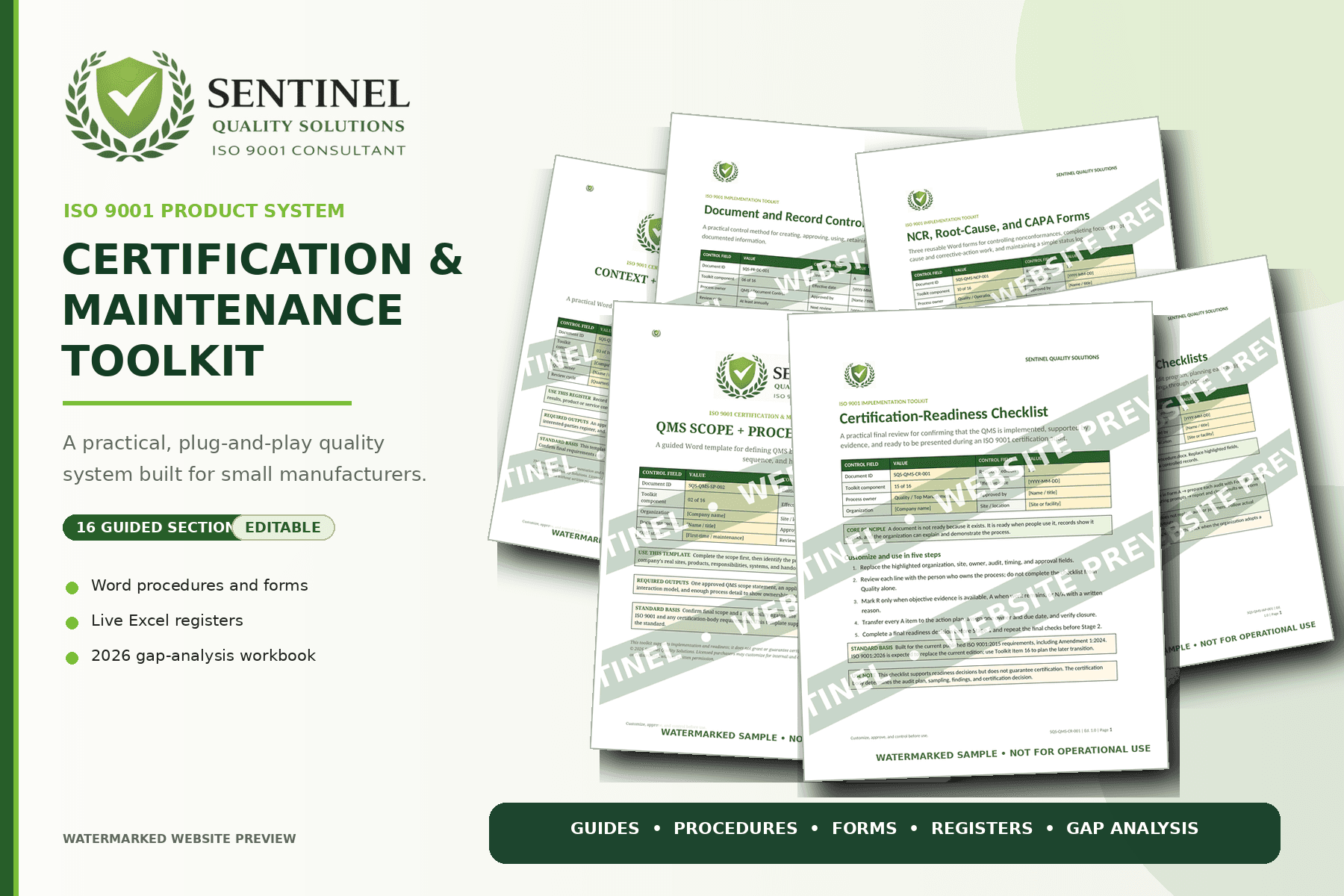
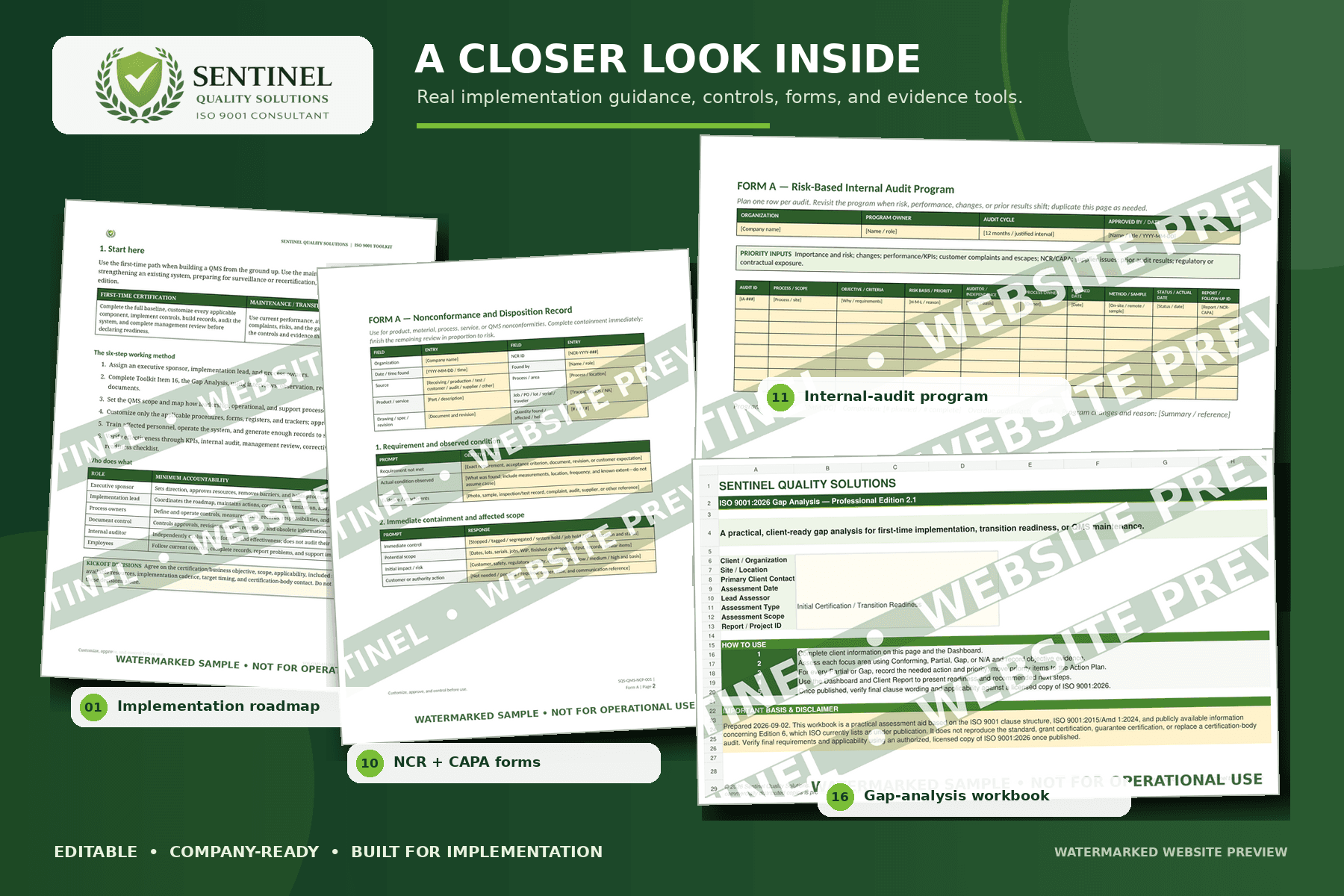
These examples show the kinds of work Sentinel resources support. Use the bundle comparison to choose the scope your team needs.
01QMS scope and process interaction
Define the activities, locations, and processes your system covers. Show how work moves from customer requirements through purchasing, production, inspection, and delivery.
On the shop floorMap who confirms drawing revisions before a job reaches the shop floor and who approves the handoff to inspection.
02Document control and quality objectives
Give procedures, forms, and records clear ownership. Connect quality objectives with a measure, an owner, and a review date.
On the shop floorTrack the approved revision of a work instruction and review a defined first pass yield target at your management meeting.
03Supplier approval and monitoring
Organize supplier evaluations, approval decisions, performance reviews, and follow-up actions in a consistent format.
On the shop floorRecord why a plating supplier was approved, review delivery and defect history, and assign an action when performance slips.
04Calibration and equipment control
Keep equipment identification, calibration status, due dates, and relevant records together so the team can find them.
On the shop floorLink an inspection instrument to its calibration record and document the review of affected work if the instrument is found out of tolerance.
05NCR, root cause, and corrective action
Connect the nonconformance report (NCR), immediate response, cause analysis, corrective action, and effectiveness review. CAPA means corrective and preventive action.
On the shop floorDocument a rejected lot, contain affected material, investigate a recurring setup issue, and check whether the corrective action worked.
06Internal audits and management review
Plan audits around your processes, capture objective evidence, and turn findings and performance information into management decisions.
On the shop floorFollow a completed order through its records, identify missing evidence, and assign owners and dates to the resulting actions.